Closed Comedones – Causes and Treatment
Reviewed by Dr Elham Kordrostami, GDC-registered dentist (No. 277619)
What are closed comedones
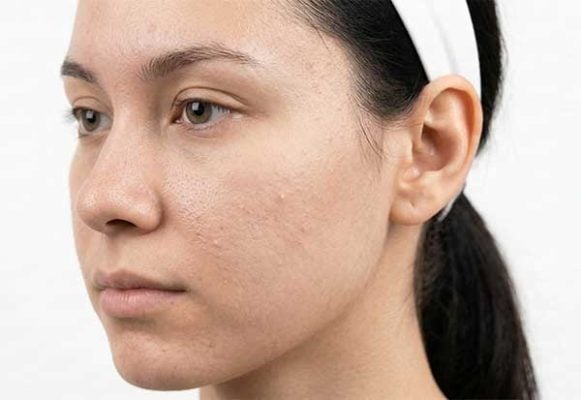
Closed comedones, more commonly known as whiteheads, are a type of non-inflammatory acne that forms when a hair follicle becomes blocked with excess sebum, dead skin cells, and bacteria. Unlike open comedones (blackheads), the pore in a closed comedo remains sealed beneath the surface of the skin, creating a small, flesh-coloured or white bump. They most frequently appear on the forehead, chin, nose, and cheeks, but can develop anywhere on the body where sebaceous glands are active. Although they are generally painless, closed comedones can be persistent and, if squeezed or picked incorrectly, may develop into more inflamed lesions such as papules or pustules.
What causes closed comedones
Several factors contribute to the formation of closed comedones. Excess sebum production is among the most common triggers; when the skin produces too much oil, it combines with dead skin cells to clog pores. Hormonal fluctuations — particularly during puberty, menstruation, pregnancy, or periods of stress — cause the sebaceous glands to become overactive, making breakouts more likely. Certain skincare and cosmetic products that are comedogenic (pore-blocking) can also aggravate the condition. Diet may play a role too, with high-glycaemic foods and dairy linked to increased breakouts in some individuals. Genetics also influences skin type and pore size, making some people inherently more susceptible.
How to treat closed comedones
Closed comedone treatment at home begins with a consistent and well-chosen skincare routine. Regular cleansing with a gentle, non-comedogenic cleanser removes excess oil and surface debris without stripping the skin. Incorporating a chemical exfoliant is particularly effective; salicylic acid (BHA) penetrates deep into the pore to dissolve the buildup that causes blockages, while alpha hydroxy acids (AHAs) like glycolic acid help accelerate cell turnover. Retinoids — available over the counter as retinol or on prescription as tretinoin — are widely regarded as one of the most effective long-term treatments. It is equally important to switch to lightweight, oil-free moisturisers and avoid picking or squeezing the skin, which can cause scarring.
Professional treatments for closed comedones
When over-the-counter treatments prove insufficient, a range of professional options are available. Dermatologists may prescribe stronger topical retinoids, oral antibiotics, or hormonal therapies. In-clinic extractions carried out by a trained aesthetician can safely clear existing comedones. Microdermabrasion exfoliates the outer layer of skin to clear blocked pores and improve texture. Laser and light therapies are also used in some cases to target overactive sebaceous glands and reduce future breakouts.
Can chemical peels remove closed comedones
Chemical peels can be a highly effective treatment for closed comedones. They work by applying a chemical solution — typically containing salicylic acid, glycolic acid, or lactic acid — to the skin, causing the outermost layers to exfoliate and revealing clearer skin beneath. Salicylic acid peels are particularly well-suited to acne-prone skin due to their oil-soluble nature, allowing them to penetrate into the follicle itself. Multiple sessions are usually recommended, and diligent SPF use after treatment is essential to protect the newly revealed skin.