
What is IPL Photorejuvenation?
IPL Photorejuvenation is a cosmetic dermatological treatment, also known as “photo-rejuvenation.” It utilizes Intense Pulsed Light (IPL) from devices like the M22 system to stimulate the skin. This light triggers chemical changes in the molecular structure of collagen and elastin fibers in the dermis, restoring their elasticity. The result is smoother skin with reduced wrinkles and smaller pores—all without damaging the skin surface.
Upgraded Stellar M22 IPL Photorejuvenation
The Stellar M22, launched in 2020 by Lumenis, is the upgraded version of the original M22 IPL system. It integrates advanced IPL (OPT) and non-ablative fractional laser technologies. With four handpieces and over 600 treatment combinations, the Stellar M22 can effectively address more than 30 types of skin concerns.
IPL (Intense Pulsed Light) is a high-intensity, broad-spectrum light source filtered and focused for therapeutic purposes. Its mechanism is based on selective photothermolysis, targeting pigmented lesions and signs of photoaging using specific wavelengths. IPL is one of the most widely used technologies in dermatological aesthetics and holds an essential place in cosmetic skin treatments.
Other technologies categorized under IPL may vary in pulse width and emission method:
-
OPT (Optimal Pulse Technology): Ensures each sub-pulse delivers uniform energy, enhancing both comfort and safety. It’s often referred to as “Perfect Pulse Light.”
-
AOPT (Advanced OPT): Adds adjustable filters to OPT, enabling physicians to customize sub-pulse energy levels for individualized treatment—highlighting the need for operator expertise. M22 systems often utilize both OPT and AOPT.
-
DPL (Delicate Pulse Light): Emits light in continuous mode for faster treatment, targeting different skin concerns.
-
BBL (BroadBand Light): Known for superior comfort by breaking energy into multiple low-intensity pulses that accumulate to the target dose.
In aesthetic medicine, IPL is a highly precise, high-density, and coherent non-surgical cosmetic procedure. It concentrates energy onto small treatment zones with minimal impact on surrounding tissue, making it suitable for various skin conditions while maintaining a high safety profile.
Why IPL Photorejuvenation Is So Popular
One of the reasons IPL is widely favored is its broad range of indications. It combines some of the capabilities of picosecond and fractional laser treatments: minimizing pores, reducing acne and acne scars, improving superficial pigmentation (like sunspots), brightening and whitening skin, reducing redness and rosacea, balancing oil production, and alleviating acne.
Beyond the face, IPL can be used on areas like the chest and back, making it a versatile treatment. It also offers anti-aging benefits, making it one of the most cost-effective options for combating signs of aging and photoaging.
About the M22 Laser Device
The M22 Laser System—commonly referred to as the M22 IPL—is considered a gold standard in photorejuvenation technology. Developed by Lumenis (USA), it is FDA-approved and CE-certified, and often referred to as the “King of Lasers.” With over 50 years of history, Lumenis is one of the world’s most experienced laser equipment manufacturers. Their devices are widely used in the medical and aesthetic industries, including the UK’s NHS and top-tier clinics.
In 2019, Lumenis entered into a strategic partnership with Ai Beauty Clinic, a testament to both organizations’ strength and professionalism.
Compared to other devices, M22 uses a 1565nm non-ablative fiber laser—far gentler than ablative 10,600nm CO₂ lasers. It features 9 interchangeable ExpertFilters and 3 SapphireCool™ light guides, combined with CoolScan™ technology, enabling precise control over shape, density, and area. With 600 preset treatment combinations, it is currently the only device to offer true non-ablative fractional laser technology (ResurFX™), setting a global benchmark for photorejuvenation.
Clinical Indications for IPL Photorejuvenation
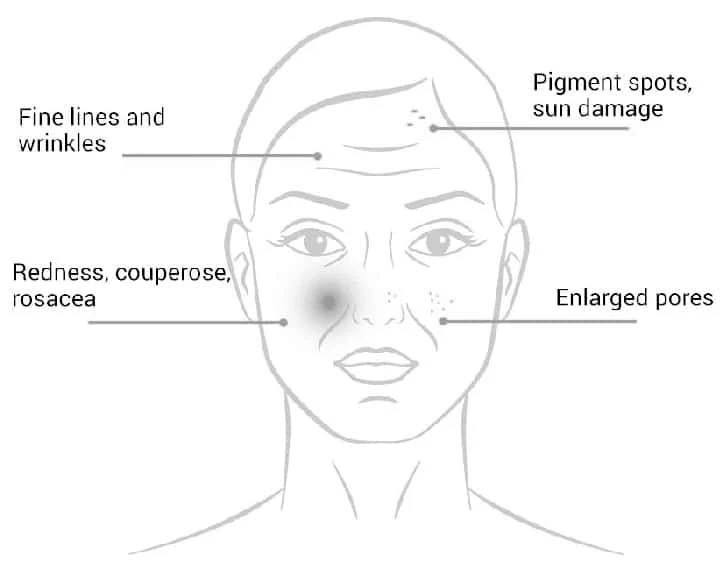
IPL photorejuvenation has been clinically proven effective and safe for the treatment of:
-
Pigmented lesions
-
Fine lines and wrinkles
-
Vascular lesions
-
Rough skin texture
-
Spider veins
-
Enlarged pores
-
Rosacea
-
Sun damage
-
Freckles
-
Age spots
Available Filters for IPL Treatments
There are 6 standard filters and 2 specialty filters used with IPL:
Standard Filters:
-
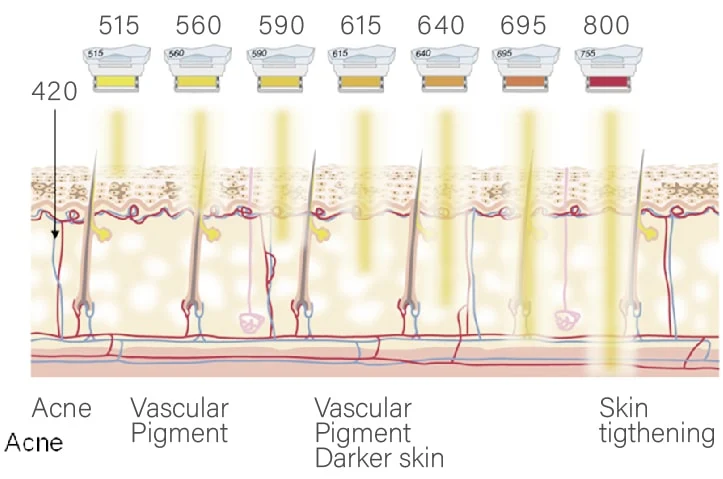
515 nm: Targets superficial epidermal pigmentation; suitable for localized pigmentation.
-
560 nm: Penetrates the full epidermis; treats photoaging, pigmentation, and vascular irregularities (ideal for Fitzpatrick skin type III).
-
590 nm: Reaches the superficial capillary plexus in the dermis; used for anti-inflammatory, anti-redness, and brightening effects (ideal for skin type IV).
-
615 nm & 640 nm: Penetrate into the reticular dermis; used to treat pigmentation and enlarged pores, promoting collagen remodeling.
-
615 nm: For melasma, hyperpigmentation, and treatment of skin type V.
-
640 nm: For overall skin rejuvenation, pore reduction, and facial hair removal.
-
-
695 nm: Targets deep dermis and hair follicles; ideal for deep skin rejuvenation, fine line reduction, and body hair removal.
Specialty Filters:
-
Vascular Filter: Designed to treat deep vascular issues; offers stronger, more precise results across a range of vessel depths and colors, from purple to red.
-
Acne Filter: Targets acne using combined porphyrin activation and sebaceous gland modulation for anti-inflammatory and oil-controlling benefits.