Work can often leave us drained and lifeless—most people have experienced the dull, grey complexion after late-night overtime. Indeed, as we age, facial skin starts to show signs of oxidative dullness. After pulling an all-nighter, the change in your complexion can become alarmingly obvious. The final “blow” to good skin often comes in the form of pigmentation. Whether it’s congenital freckles or sunspots caused by daily UV exposure, it seems like every woman eventually has to face the fate of developing spots. This facial “flaw”—hyperpigmentation(色素沉着)—often appears silently and suddenly.
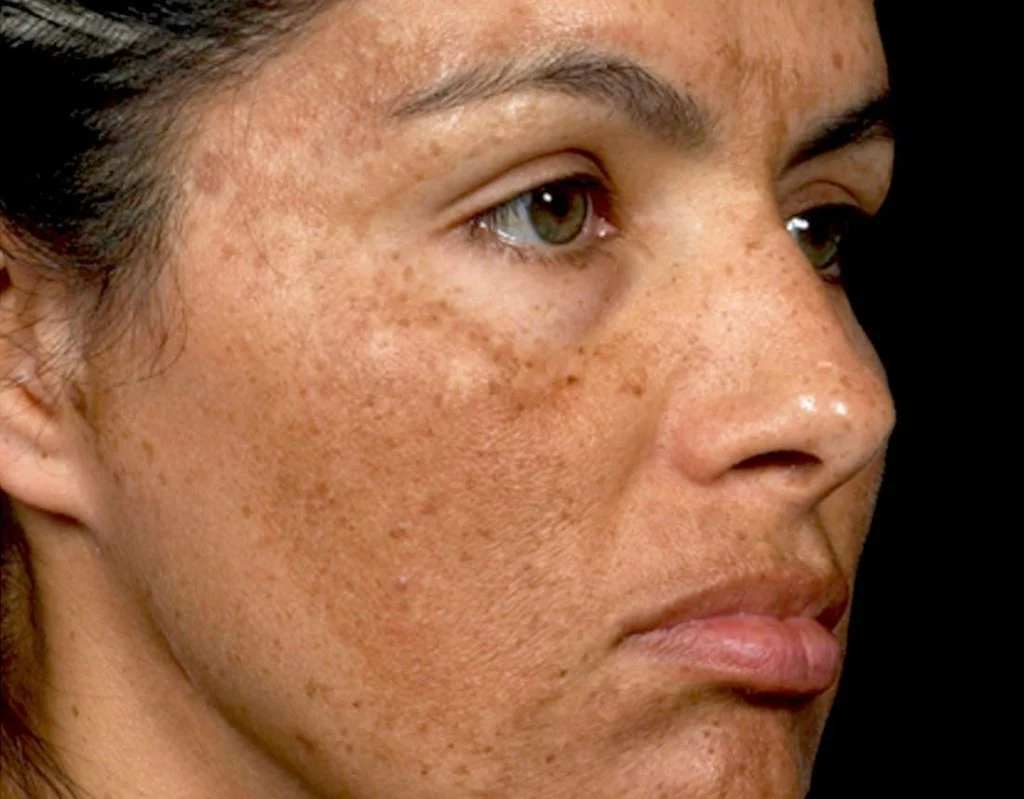
Literally translated, hyperpigmentation means “色素沉着” in Chinese. It refers to the dark spots or pigmentation deposits on the skin, causing certain areas to become darker or uneven in color. In the field of medical aesthetics, hyperpigmentation is commonly translated as 色斑 (pigmented spots), especially when describing excessive melanin buildup that results in visible discoloration. In Chinese, “色斑” is a widely used term that includes many different types of skin spots—hyperpigmentation can be considered a general category under this umbrella.
Why Does Hyperpigmentation Happen?
Having smooth, even-toned skin is a dream for many. Unfortunately, pigmentation is extremely common. It can result from a variety of causes, such as UV exposure, inflammation, hormonal changes, or aging—all of which fall under the umbrella of pigmentary disorders(色素性疾病).
For example:
-
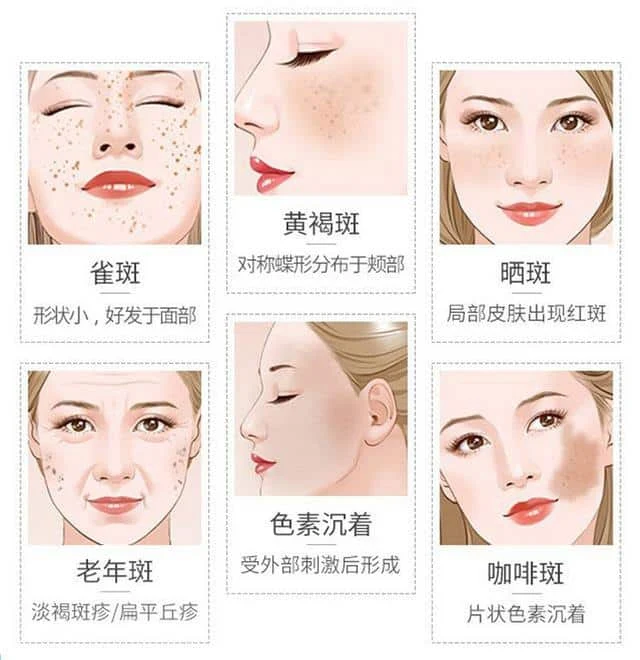
Freckles(雀斑) are often hereditary and appear on children’s faces.
-
Sunspots(晒斑), as the name suggests, are induced or worsened by UV exposure. These typically present as small brown or black spots on the surface of the skin and are classified as epidermal spots(表皮斑), similar to freckles in both appearance and histopathology.
-
Melasma(黄褐斑) and age spots(老年斑), which often appear with age, are more complex.
-
Melasma is a dermal spot(真皮斑) and is often referred to as the “king of pigmentation” due to its complicated formation. It is linked to internal hormonal changes—variations in estrogen and progesterone levels—and is more common in women. It is also known as:
-
Liver spots(肝斑), as it’s frequently seen in patients with liver conditions.
-
Butterfly spots(蝴蝶斑), due to its symmetrical appearance on both cheeks.
-
Pregnancy spots(妊娠斑), because of its high incidence during pregnancy.
-
-
Age spots, medically known as seborrheic keratosis(脂溢性角化), are related to skin aging and typically occur on areas exposed to the sun, such as the hands and forehead. They are also classified as epidermal spots(表皮斑), and may be exacerbated by ovarian dysfunction.
-
People with acne-prone or sensitive skin prone to inflammation may also develop post-inflammatory hyperpigmentation(炎症后色素沉着), another subtype of hyperpigmentation. Skin trauma—such as acne, infections, sunburn, or contact with irritants—triggers inflammation, activating melanocytes to produce excess melanin. Conditions like eczema and dermatitis flare-ups can also result in this type of pigmentation. Acne scars, too, are a form of pigment accumulation and fall under the umbrella of 色斑.
Although hyperpigmentation is complex and stubborn, advances in medical aesthetics have introduced a variety of effective treatment methods. Compared to topical skincare products, clinical aesthetic procedures offer faster and more reliable results.
1. The Gold Standard: PicoSure Honeycomb Laser(蜂巢皮秒激光)
The world-renowned PicoSure laser by Cynosure is widely recognized as a pigmentation treatment powerhouse. It’s FDA (USA) and CFDA (China) approved for treating tattoos and benign pigmented lesions. In its BOOST mode, the pulse width compresses from 750 to 550 picoseconds, increasing photomechanical pressure by 70%. It emits light at 755nm—the optimal absorption wavelength for melanin—and releases energy so quickly that melanin absorbs it in a flash and literally explodes into dust-like fragments, which are then naturally removed by the body’s immune system.
PicoSure is the only device equipped with both a 755nm wavelength and FOCUS Lens Array (“蜂巢净肤”), offering unmatched pigmentation removal performance. In London, Ai Beauty Clinic is officially authorized and strategically partnered with the manufacturer—arguably the most professional pigmentation treatment provider in the city.
2. A Gentler Choice: IPL Photorejuvenation(光子嫩肤)
For those with less severe or newer pigmentation issues, IPL (Intense Pulsed Light) is also an excellent choice. This treatment uses OPT Perfect Pulse Technology and the unique non-ablative fractional laser RESURFX. OPT targets pigment with precision—like a guided missile—directly breaking down melanin clusters. It is effective for melasma, freckles, age spots, café-au-lait spots, sunspots, port-wine stains, acne marks, and some types of birthmark pigmentation.
Because the light selectively targets pigment without affecting surrounding skin, the treatment is gentle and ideal for progressive brightening and pigmentation reduction. For enhanced results, it can be combined with chemical peels(刷酸) or melanin-targeted injections(绝斑针) to treat specific areas.
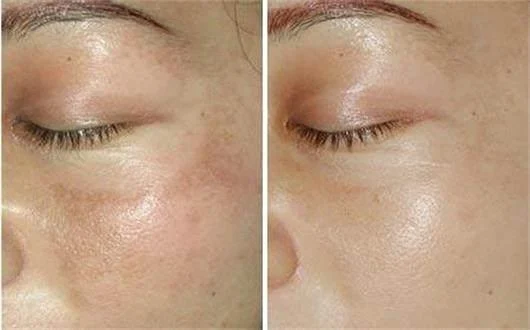
Hyperpigmentation can impact both skin tone and self-confidence. However, modern aesthetic medicine has provided promising solutions. Regardless of the type of pigmentation you’re dealing with, professional guidance can help you find the most suitable treatment.
Ai Beauty Clinic in London is a CQC-certified medical aesthetic institution. With a team of trained medical professionals and certified advanced devices, they provide safe and effective treatments tailored to your skin’s needs.