How to Say “Dermal fillers “in Chinese?
For many East Asians, facial features tend to appear flatter and less angular compared to the more prominent bone structures of Western faces. While this often gives a softer, gentler appearance, it can also create an impression of lacking definition or focal points. If you’re hoping to “build skyscrapers on flat land,” then it’s time to learn about dermal fillers(中文:真皮填充剂).
The literal translation of dermal fillers is skin or dermis fillers. More commonly, in the medical aesthetics field, this refers to what we often hear about — hyaluronic acid fillers(玻尿酸填充). Ever since the rise of non-surgical aesthetic treatments, hyaluronic acid fillers have taken the beauty world by storm. The era of “influencer faces” is, in many ways, the era of hyaluronic acid. As aesthetic medicine has rapidly developed and become more accessible, hyaluronic acid fillers are no longer considered novel — yet they remain widely used in facial refinement and contouring.
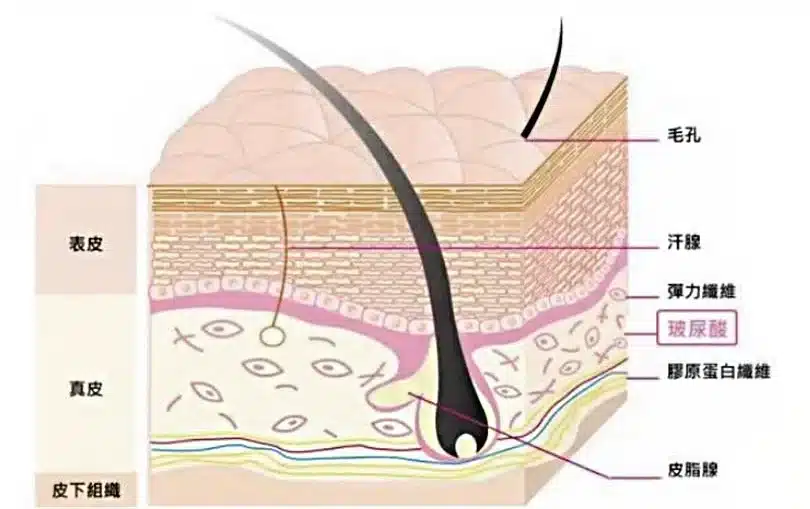
Hyaluronic acid, also known as sodium hyaluronate or 透明质酸 in Chinese, is a naturally occurring substance in the human body, mainly found in the extracellular space between cells and collagen fibers. In other words, it’s a naturally present “filler” our body produces. Once discovered, it was quickly adapted for use in both medical and aesthetic procedures, becoming a versatile and highly compatible dermal filler.
The concept behind hyaluronic acid fillers is simple: the purified form of hyaluronic acid is injected into areas of the skin that are sunken or lacking volume. It then integrates with the body’s own hyaluronic acid, causing the skin to become plumper and smoother, filling in wrinkles and sculpting more harmonious facial contours. It is one of the quickest ways to experience the transformative effects of facial reshaping.
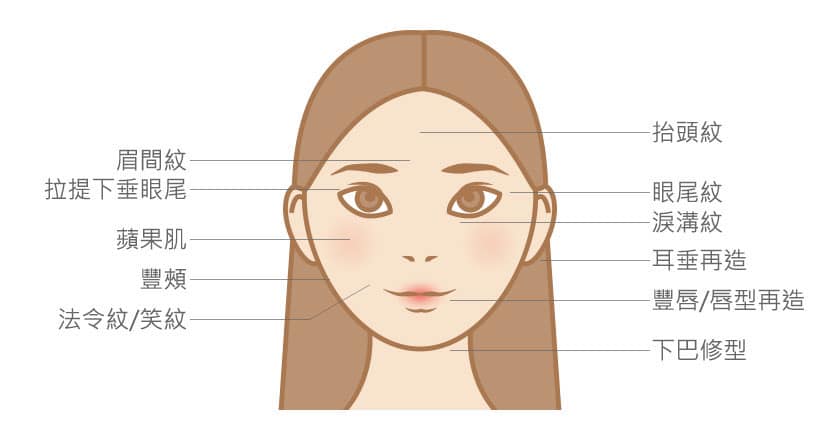
Today, hyaluronic acid filler technology is highly mature. Any area you can think of — whether it’s wrinkles, hollow areas, or parts you want to reshape — can likely be treated with filler. Common target areas include: the nasal bridge, cheeks, forehead, temples, chin, tear troughs, nasolabial folds, and even the sides of the face. Some people are even choosing to inject fillers into body parts to adjust proportions.
Dermal fillers are known for being quick and nearly invisible. If someone seems to look noticeably better — more refined and polished — seemingly overnight without surgery, chances are they slipped out after work for a little aesthetic “upgrade.”
-
Filler in the nasal bridge (山根) adds definition to the facial center and instantly enhances nose projection and overall facial structure.
-
Filler in the temples and cheeks smooths facial lines, rescuing asymmetrical or angular face shapes.
-
Filler in the forehead and cheeks (苹果肌) brings back the youthful fullness of an 18-year-old — think baby-smooth skin and round, energetic features.
-
Filler in the tear troughs and nasolabial folds erases signs of fatigue and age — these lines alone can make someone look 3–5 years older. A smoother under-eye area and lifted nasal base dramatically improve facial smoothness and balance.
-
Filler in the chin corrects recessed profiles common among East Asians, improves proportions, enhances the V-line from the front, and defines a beautiful side profile from the side.
All of this can be achieved with just one hyaluronic acid injection session.
Due to its convenience and ability to quickly reshape features, the use of hyaluronic acid fillers has started to venture into some unconventional areas. People are paying large sums to achieve 90-degree shoulders for that ideal head-to-shoulder ratio, or to get “elf ears” to make their faces look smaller. With such extreme measures gaining popularity, problems like overuse and unregulated treatments have come to light. Whether it’s unnatural results or distorted aesthetic standards, these are issues every beauty lover should be aware of.

While hyaluronic acid is safe and integrates well with the body, it’s not permanent. Over time, it gets naturally absorbed and metabolized, which makes it safe and harmless. Results typically last 6–12 months, after which maintenance injections are needed. This temporary nature also reduces the risk of long-term side effects.
Then why do some people look increasingly unnatural the more they inject? It often comes down to injection techniqueand dosage. Because hyaluronic acid is absorbable, as long as a skilled doctor uses the correct amount and injects at the right depth, results should remain soft and natural. But when the dose is too high or the injection is placed incorrectly, things can go very wrong — and facial stiffness is almost always the result of one or both of these issues.
This is why it’s crucial not to chase cheap prices or turn to unlicensed clinics. Saving money in the short term can end up costing you both aesthetically and financially in the long run.
If you’re considering dermal fillers in London, your best bet is Ai Beauty Clinic, the UK’s largest integrated Asian medical aesthetics clinic. Here’s why:
-
Asian Aesthetic Expertise
Ai Beauty Clinic specializes in Asian aesthetics — where harmony and facial balance are key. Each treatment plan is fully personalized, designed by experienced doctors after in-depth consultations. The filler is placed precisely by layer, depth, and quantity based on your individual facial structure, whether it’s the chin, nose bridge, cheeks, or lips. -
Safety and Certification
Ai Beauty Clinic is CQC-certified in the UK. All dermal fillers used are officially authorized by top-tier manufacturers, ensuring full safety and authenticity. No risks of counterfeit products or under-the-table substitutions — just reliable, professional treatments you can trust.
So, if you’re looking to enhance your appearance discreetly, safely, and beautifully, Ai Beauty Clinic is the smart choice.