In today’s increasingly personalized era, many people attempt to “mark” themselves with symbols and signs. Among the most visible—and most controversial—forms of personalization is the tattoo (纹身).
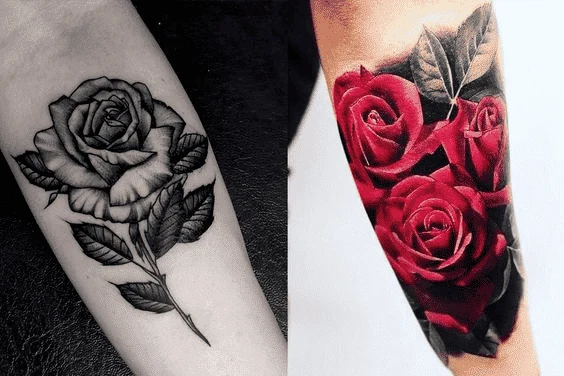
Commonly known in Chinese as “刺青”, the English term for 纹身 is tattoo. “Tattoo” functions both as a noun and a verb, much like its Chinese counterpart. A tattoo refers to using inked needles to puncture the dermal layer of the skin to create images or text. Tattoos are a product of the intersection of culture and belief, and they reflect individuality and identity.
In informal or colloquial English, tat is often used as a short form of tattoo, such as in the compliment: Nice tats! Some people also refer to tattoos as ink, echoing the phrase “inked skin,” although in this context “ink” is used as an uncountable noun.
As tattoos have become more widely accepted, the number of professional tattoo artists has grown rapidly. Because tattooing involves both technical skill and artistic design, the skill level of tattoo artists can vary greatly. There are now more and more variations of tattoos—dark ink, colorful ink, even embossed or textured styles. Tattoos can be applied to almost any part of the body, including common areas like the collarbones, arms, legs, fingers, and neck.
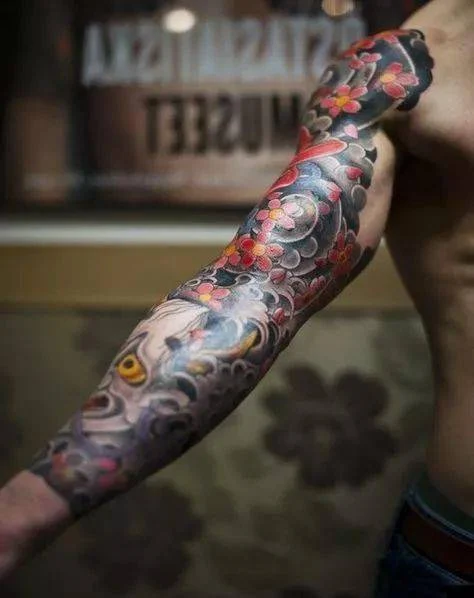
A current trend is the full-arm tattoo, which in Chinese is called “花臂”. It’s not translated as “flower arm,” but rather as a sleeve tattoo, perhaps because it visually resembles a decorative sleeve covering the arm.
While getting a tattoo can be an exciting experience, many people end up regretting it later. Whether it was done impulsively in youth or as a symbol of a past relationship, it’s important to think twice before getting inked. This is because tattoo removal (洗纹身) is not only painful and expensive—it may also fail to fully restore your skin to its original condition.
Human skin is composed of two main layers: the epidermis (表皮层) and the dermis (真皮层). The epidermis renews and sheds regularly, but the dermis does not naturally regenerate. Since tattoo ink is typically deposited into the dermis, the tattoo becomes permanent and does not fade naturally. Therefore, only certain technical treatments can be used to remove the embedded ink from the skin.
Historically, there were three main traditional tattoo removal methods:
-
Chemical peel (化学腐蚀性祛除)
-
Dermabrasion (皮肤磨削法)
-
Surgical removal (手术切除法)
As their names suggest, these methods are invasive and carry risks of trauma and scarring.
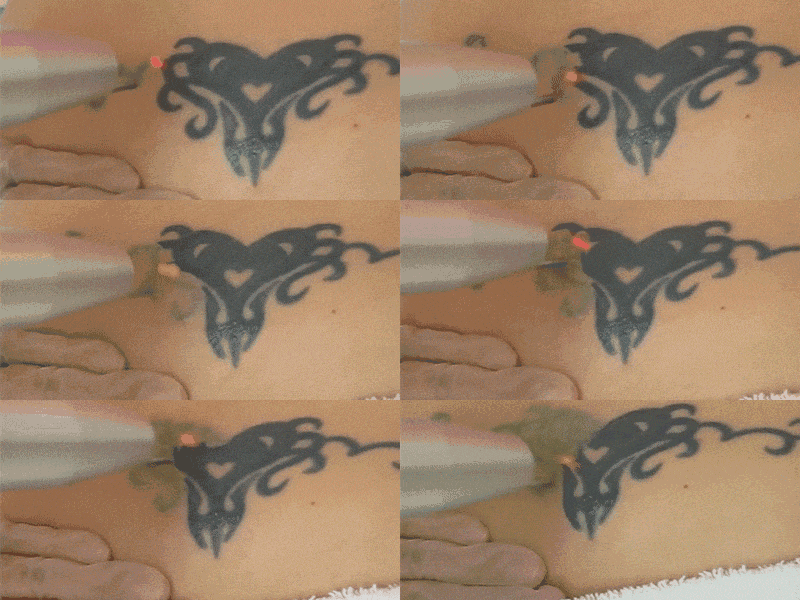
Today, the most commonly used and safest method is laser tattoo removal, particularly the PicoSure laser treatment(蜂巢皮秒激光). This advanced technique uses the 755nm laser photomechanical effect to penetrate the epidermis and reach the dermis. It then breaks apart the pigment particles into microscopic fragments. These are gradually removed by scabbing, cellular phagocytosis, or through the lymphatic and circulatory systems, eventually fading and disappearing.
PicoSure is FDA-approved in the United States and CFDA-certified in China. It is 7 times faster than traditional laser technology, making it an ideal solution for people seeking safe and effective tattoo removal.
Laser tattoo removal is a medical procedure, and should only be performed by qualified professionals. Some unlicensed studios still operate without proper certifications, which can pose serious safety risks. If you are considering a permanent tattoo removal solution, it is essential to choose a licensed and reputable clinic.
For instance, Ai Beauty Clinic in London is an officially authorized provider of PicoSure laser treatments. All appointments must be scheduled in advance.