
Wrinkles are often seen as the marks time leaves on our faces. Aside from some fine lines, the wrinkles that most significantly impact how old we appear at first glance include nasolabial folds, crow’s feet, and forehead wrinkles. However, there’s one frequently overlooked yet highly aging wrinkle that forms around the corners of the mouth—木偶纹, known in English as Marionette Lines or puppet lines.
As the name suggests, Marionette Lines are the vertical lines that extend downward from the corners of the mouth, resembling those seen on a puppet. In more pronounced cases, they are also referred to as drool lines or bracket lines. Some people with clearly defined marionette lines are humorously said to have a “bracket mouth” due to the resemblance.
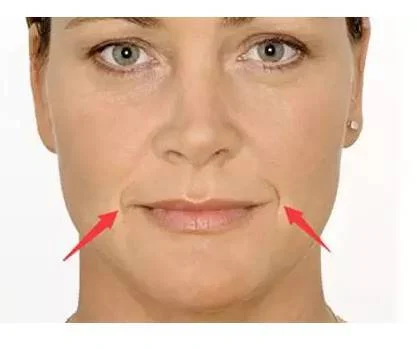
Just like nasolabial folds, marionette lines are among the most prominent signs of aging in the mid-to-lower face. They are usually associated with sagging and skin laxity, often accompanied by arc-shaped depressions outside or below the corners of the mouth. In more advanced cases, they may be coupled with a Perioral Mound—a pouch of tissue near the mouth corners.
In general, marionette lines are caused by factors such as decrease in soft tissue volume, loss of structural support, and loss of collagen and dermal elasticity. Overactive facial expressions, high cheekbones, a protruding chin, or underdeveloped facial muscles may contribute to the early appearance of nasolabial folds and marionette lines. Of course, collagen depletion that naturally comes with aging is a key culprit behind the formation of most wrinkles. In some cases, changes in facial bone structure reduce facial support, leading to sagging around the lower face and the gradual formation of marionette lines and jowls.
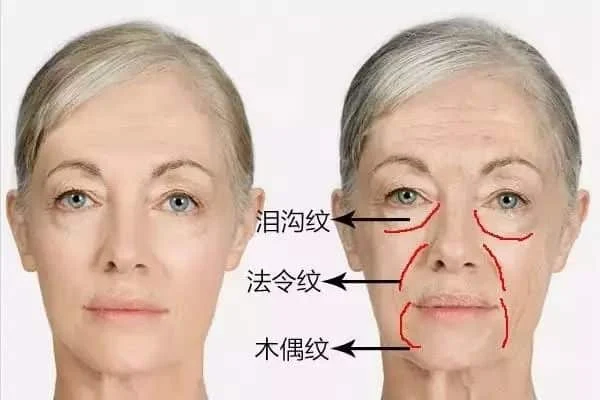
Like most wrinkles, marionette lines can be categorized into two types:
-
Static Marionette Lines: Present even when the face is at rest, commonly seen in middle-aged and older individuals. These often come with fat pockets around the mouth and sagging skin.
-
Dynamic Marionette Lines: Appear only with facial movements or expressions, more common among younger individuals. Repeated expressions can deepen these lines over time.
For people of Asian descent, natural maxillary retrusion (backward position of the upper jaw) and mandibular hypoplasia (underdeveloped lower jaw or chin) result in weaker facial support structures. Combined with age-related bone volume loss, this makes marionette lines more likely to appear and worsen over time. When they become noticeable, medical aesthetic interventions may be needed for anti-aging.
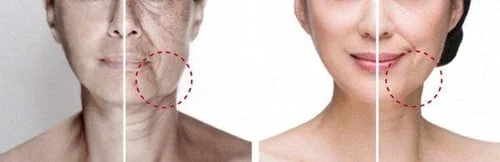
In terms of face rejuvenation, non-invasive anti-aging technologies are often used to tighten the skin and stimulate collagen regeneration, providing a comprehensive solution to facial aging and wrinkles.
According to Ai Beauty Clinic in London, one of the most effective treatments specifically for marionette lines around the mouth is Fotona 4D PRO, a high-tech anti-aging device from Europe. It features a unique Smooth mode for perioral (around-the-mouth) treatment, where the laser handpiece is inserted into the oral cavity to heat the oral mucosa, tightening the surrounding skin. This method effectively improves nasolabial folds, marionette lines, and fine linesaround the mouth. Additionally, the Piano mode can help address sagging issues such as chubby cheeks and double chin.
For marionette lines associated with Perioral Mound and skin laxity, a combination of injections and anti-aging treatments is often recommended for better results.