When it comes to the signs of facial aging, in addition to wrinkles and sagging skin, hollow areas are also a major culprit. Among these, the hollowing of the temples (太阳穴凹陷) significantly affects facial contours and overall appearance. So how do you express “太阳穴凹陷” in English if you’re in the UK?
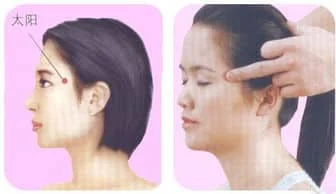
In Chinese, “太阳穴” (temples) is not only an acupuncture point but also known as the “夫妻宫,” located in front of the ears, on both sides of the forehead, above the outer corners of the eyes, or in the recessed area just behind the brows. In English, this area is referred to as the temple. While “temple” commonly means a place of worship, it also refers anatomically to the side of the head behind the eyes—the temple. When describing a hollow appearance in this area, the commonly used English term is hollow temples.
The temple area is naturally a slight depression and can be easily sunken due to the lack of bone support. Some people are born with a skeletal structure that includes naturally hollow temples, while others may develop them due to facial fat loss. More commonly, however, aging is the main contributor to hollow temples. As we age, our body begins to lose collagen, moisture, and essential nutrients, leading to atrophy of the subcutaneous fat tissue in the temple area. In more advanced cases, the temporal muscle (颞肌 / the temporal area) may also shrink, and the fat layer becomes thinner—resulting in increasingly noticeable hollowing. To make matters worse, this may be accompanied by a widening of the zygomatic arch (颧弓) and more prominent cheekbones (颧骨 / cheekbone), further exaggerating the sunken look of the temples.
We all know that a smooth, harmonious facial contour greatly influences a person’s appearance and aura. Once the temples are hollow, the cheekbones appear more protruded, often creating a facial expression that seems harsh, tired, or even aggressive. It becomes visually obvious that collagen is depleted, the youthful fullness is gone, and instead, the uneven contours of the face reflect signs of aging and fatigue. This leads to a more angular, skeletal look—often referred to as a “菱形脸” in Chinese, which translates to a diamond- or bony-shaped face.
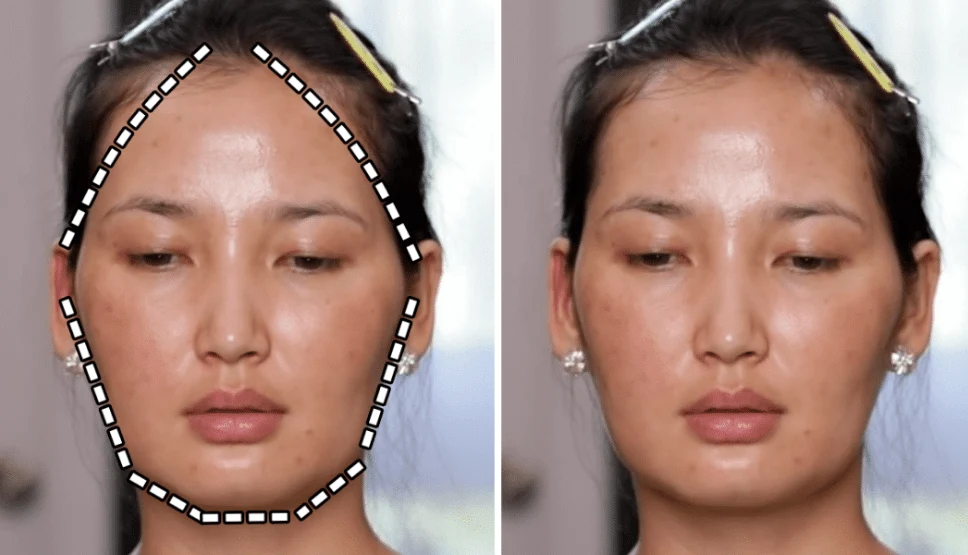
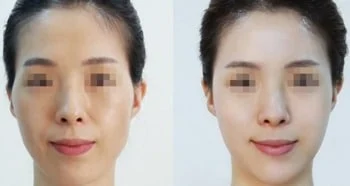
For those concerned about hollow temples, many seek help from aesthetic medicine (医美微整). Among the non-surgical and non-invasive options, Hyaluronic Acid Dermal Fillers (玻尿酸填充) are considered the safest and fastest solution to restore volume to the temples. Using medium-density hyaluronic acid (Hyaluronic Acid / HA), this injectable filler blends naturally with the body’s own hyaluronic acid and fills the hollowed area, gradually restoring volume. The facial contour instantly appears smoother and more youthful—reducing the look of fatigue and aging. Even those with prominent zygomatic arches (颧弓) or high cheekbones (颧骨) that emphasize temple hollowness can benefit from this treatment.
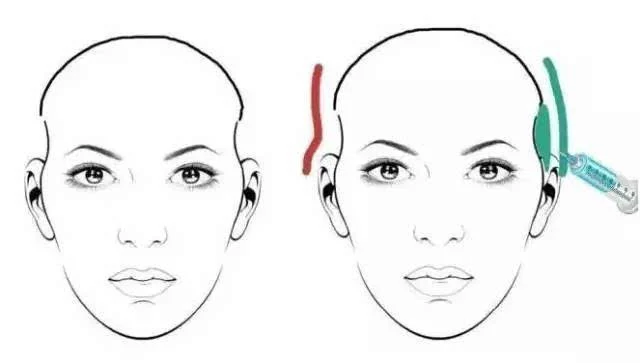
Compared to fat grafting (脂肪填充), hyaluronic acid fillers offer a safer, low-risk alternative. They are biodegradable, leave no residue in the body, and carry minimal side effects or downtime. The treatment can be administered and show immediate results, offering a natural and subtle enhancement.
If you’re looking for a safe and professional clinic in London, UK, to improve flat or hollow temples, Ai Beauty Clinic, certified by the Care Quality Commission (CQC)—the UK’s national healthcare regulatory authority—may be your best choice. All filler procedures are performed by certified medical injectors trained by major manufacturers. With extensive experience and a strong grasp of Asian aesthetics standards (亚洲审美), their natural sculpting results are rare to find overseas.